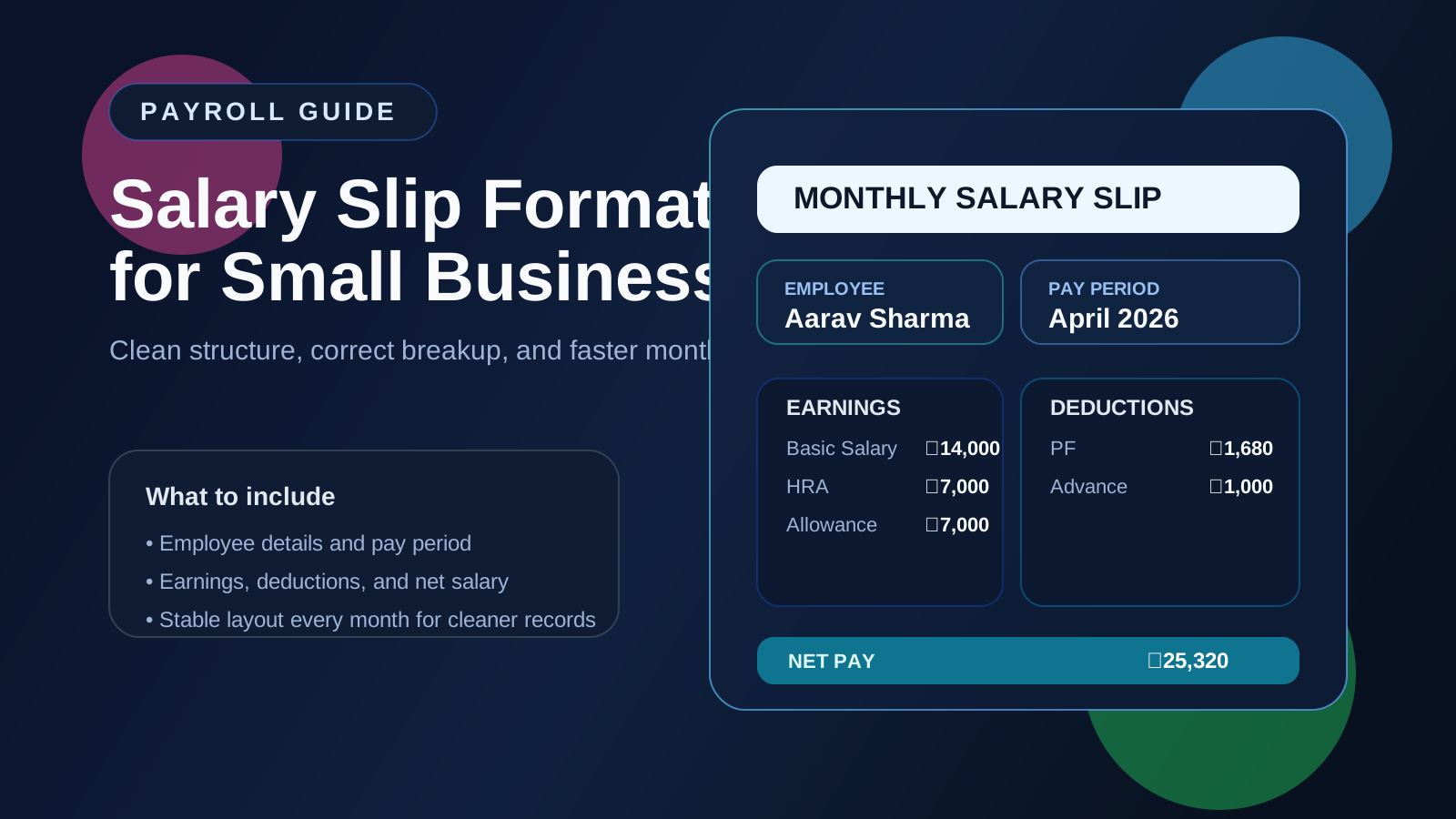
Salary Slip Format for Small Business: What to Include and How to Make It Online
What you will learn
- The right salary slip format for small business use is one that is simple, readable, and complete enough for employee records, loan applications, and payroll clarity. It should clearly show employee identity, pay period, earnings, deductions, and final net pay without forcing the employer to maintain a bulky HR system.
- At minimum, include company name, employee name, employee ID if used, designation, salary month, payment date, and contact or address context if your team needs formal records. Then show earnings such as basic salary, HRA, allowances, overtime, bonus, or incentives wherever applicable.
- Suppose a small agency pays one employee Rs. 28,000 gross for April. The earnings block may show Basic Rs. 14,000, HRA Rs. 7,000, Conveyance Rs. 2,000, and Special Allowance Rs. 5,000. If deductions include PF Rs. 1,680 and salary advance recovery Rs. 1,000, the net pay shown should be Rs. 25,320.
Table of contents
Open Salary Slip Generator →- 1. What is the right salary slip format for a small business?
- 2. Which fields should every small business payslip include?
- 3. A simple salary slip example for a 10-person business
- 4. Common mistakes small businesses make in payslip formatting
- 5. How to create salary slips faster without building a payroll system
- 6. A monthly checklist before sharing the payslip
- 7. When employees use salary slips outside the company
- 8. Best next step if you need salary proof plus related documents
What is the right salary slip format for a small business?
The right salary slip format for small business use is one that is simple, readable, and complete enough for employee records, loan applications, and payroll clarity. It should clearly show employee identity, pay period, earnings, deductions, and final net pay without forcing the employer to maintain a bulky HR system.
For most Indian small businesses, the best format is not the most complex template. It is the one that helps the owner generate a clean monthly slip quickly, keep a consistent structure, and avoid disputes about salary breakup later.
Which fields should every small business payslip include?
At minimum, include company name, employee name, employee ID if used, designation, salary month, payment date, and contact or address context if your team needs formal records. Then show earnings such as basic salary, HRA, allowances, overtime, bonus, or incentives wherever applicable.
On the deduction side, mention PF, ESI, professional tax, TDS, salary advance recovery, or any other payroll adjustment actually used in the business. The final net salary should stand out clearly so the slip works as both an internal record and an employee-facing proof document.
Continue with action-ready tools
A simple salary slip example for a 10-person business
Suppose a small agency pays one employee Rs. 28,000 gross for April. The earnings block may show Basic Rs. 14,000, HRA Rs. 7,000, Conveyance Rs. 2,000, and Special Allowance Rs. 5,000. If deductions include PF Rs. 1,680 and salary advance recovery Rs. 1,000, the net pay shown should be Rs. 25,320.
This kind of example matters because many owners search salary slip format for small business when they want a layout that is professional but not overbuilt. A compact structure with visible totals usually works better than a crowded spreadsheet full of unused payroll columns.
Common mistakes small businesses make in payslip formatting
One common mistake is using a salary slip that only shows a final amount and nothing else. That may feel faster, but it creates confusion when an employee asks for a breakup or needs the slip for a bank, landlord, or visa-related purpose.
Another mistake is changing the structure every month. Small businesses save time when the same fields appear in the same order across all employees. Consistency helps payroll review, improves trust, and makes future record checks much easier.
How to create salary slips faster without building a payroll system
If your team is small, you do not need a heavy payroll stack just to issue clean salary slips. A focused online salary slip generator is often enough because it lets you enter the month, employee details, salary breakup, and deductions in a standard structure and export a presentable document quickly.
This works especially well for founders, shop owners, agencies, and service businesses that want professional output but do not want to manage a complicated back-office workflow. The goal is speed with consistency, not enterprise-level process overhead.
A monthly checklist before sharing the payslip
Before sending the file, verify three things once: salary month, gross-to-net math, and deduction labels. This small review step catches most avoidable errors, especially when payroll is being managed manually in a lean team setup.
It also helps to confirm whether any incentive, leave adjustment, or advance recovery was added that month. Small businesses often work with variable payouts, so one final check keeps the payslip believable and reduces back-and-forth after release.
When employees use salary slips outside the company
Employees do not only use salary slips to check whether they were paid correctly. They may need them for rental discussions, personal loans, card applications, joining formalities, or proof of stable income in everyday situations. That is why formatting quality matters even for a five-person or ten-person business.
If the slip looks incomplete or confusing, the employee often comes back to request a revised version. A neat format saves both sides time. For a small business, that operational calm is just as valuable as the document itself.
Use our free tool, no signup:
Salary Slip Generator →Related calculators
Related reading
View all posts Payroll
Salary Slip Components Explained: Basic Pay, HRA, DA, PF, TDS Deductions
6 min read1,105 wordsSalary Slip Generator IndiaEvery salary slip component explained with real examples. Understand basic pay, HRA, DA, conveyance allowance, PF, ESI, professional tax, TDS. CTC vs gross vs net salary breakdown for ₹8 lakh CTC.
Read more Payroll
Driver Salary Slip - Format, Legal Requirements, and Best Practices in India
7 min read1,500 wordsDriver Salary Slip GeneratorComplete guide to creating driver salary slips in India. Covers the proper format, minimum wage requirements, TDS rules, and why maintaining salary records is important.
Read more Finance Guide
HRA Exemption Calculator (Metro vs Non-Metro): Old Regime Comparison Guide
2 min read308 wordsHRA Exemption CalculatorCompare metro vs non-metro HRA exemption in old regime with practical salary and rent examples. Understand 50% vs 40% cap and when it changes your taxable HRA.
Read more